
 By
·
5 minute read
By
·
5 minute read
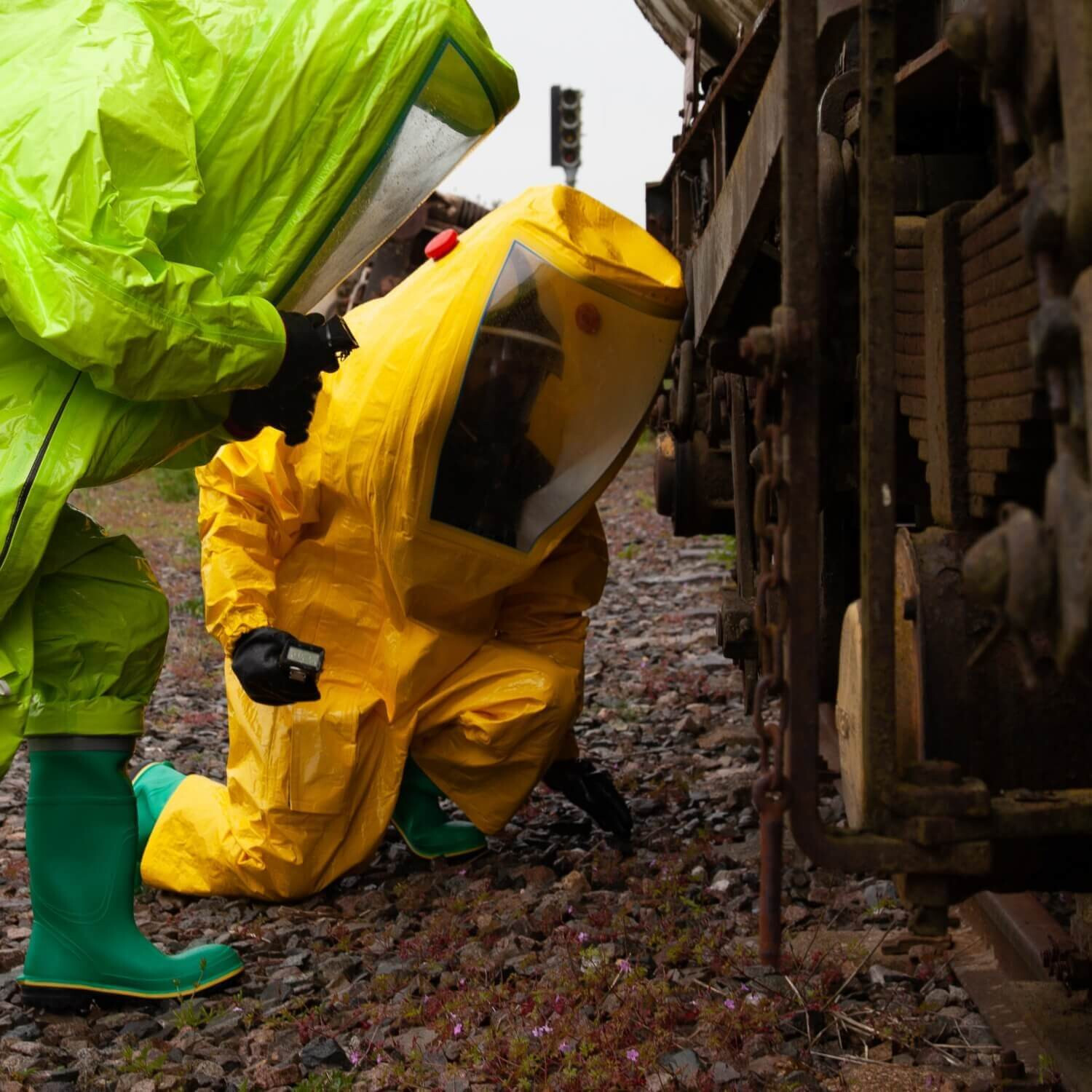
Selecting the right gas-tight suit for CBRN incident response is one of the most consequential decisions a hazmat team will make. The choice between a single-use and a reusable CBRN protective suit affects wearer comfort, operational readiness, long-term cost, and post-incident logistics.
Yet the decision is rarely straightforward. Incident frequency, storage constraints, decontamination capability, and budget all play a role. Respirex International manufactures both single-use and reusable gas-tight suits to EN 943-2, giving safety teams a complete range to match protection to real-world demands.
This article breaks down the practical differences between the two suit categories so you can choose with confidence.
Key Takeaways: Understanding Single Use vs Reusable CBRN Suits
- Single-use gas-tight suits are lighter, faster to deploy, and eliminate the need for post-incident recertification testing.
- Reusable suits offer greater mechanical durability and are more economical when incident frequency is high.
- Both suit types can meet EN 943-2 Type 1A (ET) certification for emergency team use.
- Respirex International offers the GTL (single-use), GTR (limited-life), and GTB (reusable) to cover every use case.
- Your operational environment, incident rate, and decontamination resources should drive suit selection.
What Is a Gas-Tight CBRN Protective Suit?
A gas-tight CBRN protective suit shields the wearer from toxic, corrosive, and hazardous chemicals in liquid or gaseous form. These suits are worn in environments classified as immediately dangerous to life and health (IDLH).
In Europe, gas-tight suits for emergency teams are certified to EN 943-2, which sets requirements for inward leakage, chemical permeation, and mechanical strength. The standard recognises two robustness levels: enhanced robustness (for reusable suits) and regular robustness (for single-use or limited-life suits).
Both categories protect against chemical warfare agents, infective agents, and radioactive particulate when the fabric meets the relevant test standards.
How Do Single-Use Gas-Tight Suits Work?
Single-use suits are designed to be worn once and disposed of after the incident. They are manufactured from advanced multi-layer laminate fabrics that bond different barrier materials into a single, lightweight sheet.
The Respirex GTL gas-tight suit, for example, uses Chemprotex 400, a high-performance laminate fabric offering permeation resistance of more than 480 minutes against over 100 common chemical hazards. It is certified to EN 943-2 Type 1A (ET), the same standard as its reusable counterpart.
After exposure, the suit is decontaminated only enough for safe removal from the wearer, then disposed of responsibly. Chemprotex 400 is halogen-free, so it can be incinerated or recycled as mixed polyolefin.
How Do Reusable Gas-Tight Suits Differ in Construction?
Reusable suits are built from heavier, more abrasion-resistant materials such as Viton/Butyl/Viton (VBV), ChloroTex, or Viton Laminate. These coated fabrics can withstand repeated chemical exposures, decontamination cycles, and physical wear.
The Respirex GTB suit is a Type 1A (ET) enhanced robustness reusable suit with a fifteen-year shelf life. It requires an annual internal pressure test, or a test after each use, and it must pass decontamination verification before it can be returned to service.
The increased material weight delivers higher puncture and abrasion resistance, which is an advantage in environments with sharp edges, debris, or repeated physical contact with hazardous surfaces.
What Are the Weight and Comfort Differences?
Weight is one of the most noticeable differences between the two suit types. A single-use GTL weighs roughly a quarter of the equivalent reusable GTB. That difference translates directly into reduced heat stress and physical fatigue for the wearer.
Single-use laminate fabrics are also more supple and less bulky, allowing greater freedom of movement during operations. UK field trials have demonstrated lower levels of heat stress and exhaustion when responders wore lighter-weight suits, according to data referenced in Asia Pacific Fire magazine.
Improved sound transmission through the fabric is another practical benefit, making communication and situational awareness easier during an active response.
When Does a Single-Use Suit Make More Sense?
If your team responds to chemical incidents infrequently, single-use suits often represent the more practical and cost-effective choice. For the price of one reusable GTB in VBV material, you could purchase multiple GTL suits, all meeting the same EN 943-2 (ET) standard.
Single-use suits also remove the logistical burden of annual testing, inspection, and recertification. The GTL has a seven-year maintenance-free shelf life, a significant advantage over reusable suits that need yearly pressure tests. Storage is simpler too: a GTL packs into roughly one third of the volume of an equivalent reusable suit, freeing up space on fire appliances.
After use, there is no risk of cross-contamination from improperly decontaminated garments because the suit is never reused.
When Is a Reusable Suit the Right Choice?
Reusable suits earn their place when incident frequency is high enough to justify the upfront cost and the ongoing maintenance programme. Industrial sites such as petrochemical plants, pharmaceutical facilities, and water treatment works may deploy suits regularly enough that repeated decontamination and re-testing become more economical than replacing single-use garments each time.
The heavier fabrics also perform better in environments where abrasion, puncture, or repeated physical stress are likely. If your operational environment includes confined spaces, rough surfaces, or extended working durations, the mechanical durability of materials like VBV or ChloroTex can be a decisive factor.
What About Limited-Life Suits?
Between the single-use and fully reusable categories sits the limited-life suit. The Respirex GTR suit is manufactured in Tychem TK, a seven-layer nonwoven chemical barrier fabric that balances the lightweight properties of single-use materials with a degree of reusability.
Limited-life suits can be worn a set number of times before they must be retired. This makes them a practical middle ground for teams that face occasional incidents but want the option of reuse when decontamination is straightforward.
The GTR meets the same EN 943-2 Type 1A (ET) standard, ensuring the same level of gas-tight certification.
How Does Decontamination Factor into Suit Selection?
Decontamination is often the overlooked element in suit selection. With reusable suits, you need confirmed decontamination protocols, trained personnel, and facilities to carry out the process after every exposure. If the suit cannot be safely decontaminated, a "reusable" suit effectively becomes single-use anyway.
Respirex also manufactures inflatable decontamination showers through our sister company MFC International, designed to support on-scene responder and casualty decontamination. Your decontamination capability directly influences how practical a reusable suit programme will be for your team.
For teams with limited decon infrastructure, single-use suits simplify post-incident procedures considerably.
What Standards Should You Look for in Gas-Tight CBRN Suits?
Both single-use and reusable CBRN suits for emergency teams should carry EN 943-2 Type 1A (ET) certification. This standard tests the complete suit assembly for gas-tightness, inward leakage, and material performance against chemicals, including CE marking under PPE Regulation (EU) 2016/425.
Also look for chemical warfare agent testing (e.g. HD, GB, GD, and VX) to ether the FINABEL 0.7.C or TOP 10-2-022 standards. Certification to EN 14126 confirms protection against infective agents. For maritime use, SOLAS 1974/1988 approval is an additional requirement that the GTL meets.
Do not assume a higher price indicates a higher protection level. Both suit categories can achieve equivalent chemical barrier performance when manufactured with the right materials.
In Conclusion: How to Match CBRN Suit Type to Your Operational Needs
Choosing the right CBRN protective suit depends on your incident frequency, decontamination resources, storage capacity, and operational environment. There is no universally correct answer.
Single-use suits deliver lighter weight, simpler logistics, and lower lifetime cost for teams that respond to incidents occasionally. Reusable suits offer mechanical durability and long-term economy where regular use is expected. Limited-life options like the GTR fill the gap between the two.
Respirex International builds all three categories to the same EN 943-2 (ET) standard, so your team never has to compromise on protection level regardless of which route you choose. Contact us for advice on matching suit selection to your operational requirements.
FAQs About Single Use vs Reusable CBRN Suits
Are single-use gas-tight suits as safe as reusable ones?
Yes. Both types can achieve EN 943-2 Type 1A (ET) certification with equivalent chemical permeation resistance. Respirex International designs its GTL single-use suit to meet the same gas-tight and inward leakage standards as its reusable GTB.
How long can you store a single-use CBRN suit before it expires?
The Respirex GTL has a seven-year maintenance-free shelf life, with a maximum shelf life of ten years. During the initial seven year period no inspection or pressure testing is required, making it practical for standby stockpiles.
Can a reusable gas-tight suit always be reused after an incident?
Not always. If the suit cannot be safely decontaminated because of the specific chemical or agent involved, it must be retired after a single use. Your decontamination capability directly affects how many times a reusable suit can be returned to service.
What makes Respirex suits different from other CBRN protective suits?
Respirex International manufactures single-use, limited-life, and reusable gas-tight suits all certified to EN 943-2 (ET), giving you a matched family of products from one manufacturer. This means consistent CBRN protection and training familiarity across your entire fleet.
How do I decide which gas-tight suit type my team needs?
Start with your incident frequency, then assess your decontamination resources, available storage space, and operational environment. Respirex International offers technical guidance to help you match suit selection to your specific risk profile and budget.